
Getting Comfortable in Your Vehicle: A Learner’s Guide
Before you even start the engine, there’s a smart way to begin your driving journey. Getting comfortable in your vehicle is essential, especially for learners. In this learner’s guide, we emphasize the importance of getting comfortable in your vehicle. Learning a vehicle’s layout, controls, and safety features ahead of time can turn driving from awkward to confident. At Faizan’s Defensive Driving School, we believe that knowing your car well is just as important as learning how to drive it. Understanding the importance of getting comfortable in your vehicle forms the foundation of our teaching.
Why It Pays to Familiarize Yourself First
- Safety: Every car has its quirks—buttons in different places, different sensitivity of the brake, varying mirror visibility. Familiarity helps you react correctly in unexpected moments, emphasizing the need for getting comfortable in your vehicle.
- Confidence: Knowing where the wipers, lights, or hazard signals are takes away that nervous “what if I mess this up” feeling.
- Better Control: When you don’t have to guess what a control does, your movements are smoother. That helps with coordination, handling, and avoiding distractions while getting comfortable in your vehicle is crucial.
Five Things You Should Always Do Before You Drive
- Seat & Mirror Adjustment
Make sure your seat is set so you can comfortably reach the pedals and steering wheel. Adjust your mirrors so you can see clearly behind and beside the car. Headrest position matters too—for both comfort and safety when getting comfortable in your vehicle. - Locate Important Dashboard Indicators & Controls
Identify things like the speedometer, fuel gauge, temperature gauge, and warning lights. Also find the controls you’ll use often—turn signals, lights, heater/air conditioning, wipers—so you aren’t scrambling once you’re driving. - Pre-Drive Safety Features Check
Prior to moving off, check your seatbelt, see that airbags are enabled (if applicable), locate hazard lights, and verify emergency equipment (if needed) is accessible. Know where the handbrake or parking brake is, just in case. - Understand Dashboard Warning Lights
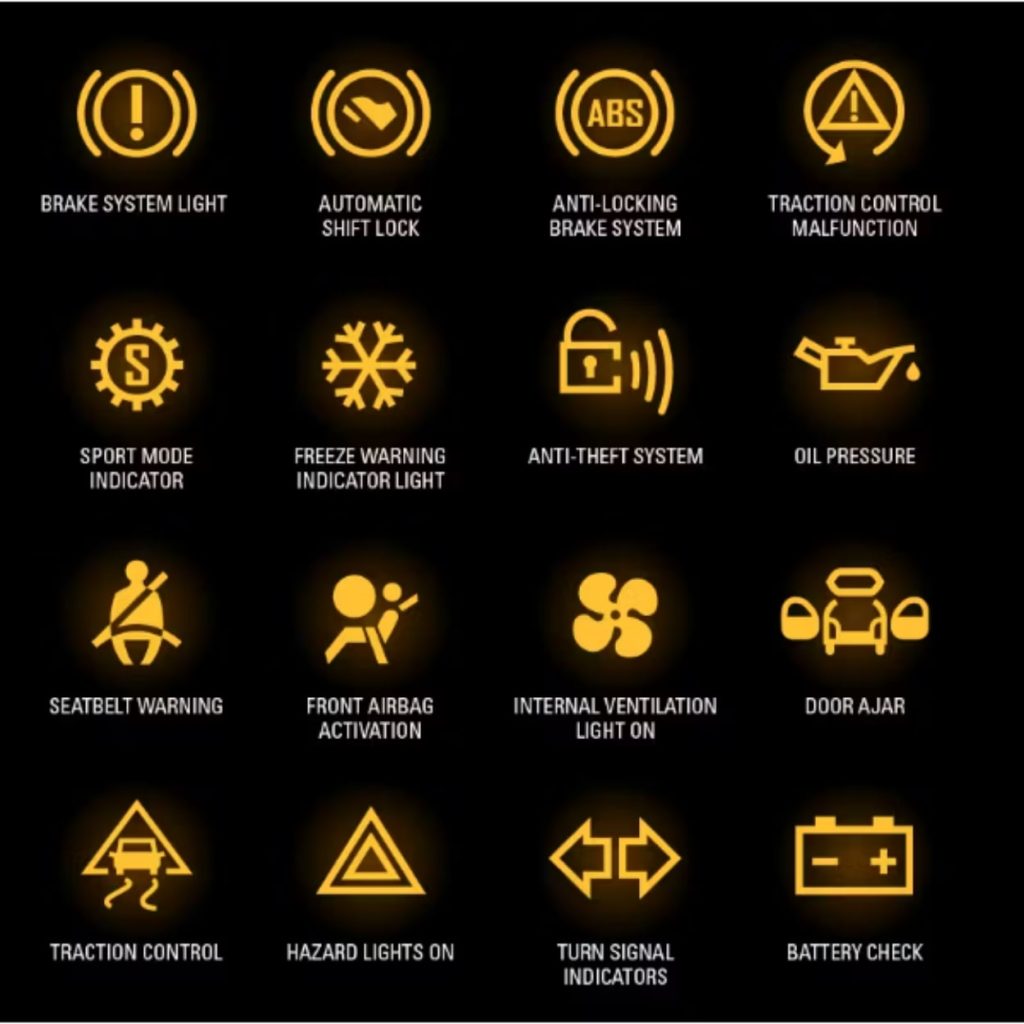
Some lights warn you of something minor; others mean you need to act right away. Common ones are low fuel, battery charge issues, oil pressure, tire pressure, brake system alerts, ABS, etc. Knowing what each means helps you respond more calmly. - Plan Your Route Before Moving
Whether you’re using GPS or simply mapping things in your mind, try to plan where you’re going before driving. Set up navigation (hands-free), so you don’t have to fiddle or take your eyes off the road.
Dashboard Warning Lights Explained
Key Controls & Features You Should Know
| Component | Why It Matters |
| Pedals & Gear Selector | Smooth shifting or braking depends on your understanding of how these work. If it’s an automatic vs. manual, that changes everything. |
| Steering Wheel & Grip | How it feels, how far it turns, where adjustable levers are—these affect your control. |
| Mirrors & Visibility | Blind spots, glare, and mirror angles all matter. Correctly adjusted mirrors reduce surprises. |
| Lights & Signal Systems | Being seen, signaling your intentions, and having proper visibility in bad weather are essential. |
| Climate Controls & Wipers | They may seem comfort-related, but foggy windows or a failing heater in winter can affect your safety. |
Vehicle Safety Features You Should Know
- Seat Belts & Headrests – Your first line of protection.
- Airbags – Understand where they are and any warnings that indicate issues.
- Anti-lock Brakes (ABS) / Traction Control – These help in slippery or emergency braking situations.
- Emergency Brake / Handbrake – Vital for parking, steep hills, or sudden vehicle stops.
Vehicle Controls and Their Functions
How Our Driver’s Ed at Faizan’s Defensive Driving School Helps You Master These Basics
In our driver education program, we don’t just teach you how to drive—we make sure you understand the vehicle you’re driving. Our instructors walk you through all the critical controls, safety features, and hazard indicators before you hit the road. We also give you hands-on time in low-pressure settings (like empty parking lots) so you can experiment with adjustments and controls safely. Getting comfortable in your vehicle: a learner’s guide can’t be complete without this practical experience.
Final Thoughts
Vehicle familiarization is more than just a checklist—it’s the basis for safer, more confident driving. Whether it’s your first lesson or you’re getting back behind the wheel after some time off, taking a few moments to get comfortable with your car can make a big difference. At Faizan’s Defensive Driving School, we’re here to walk you through it step by step with our guide on getting comfortable in your vehicle.