
Mastering Steering: The Key to Maximum Vehicle Control
Steering a car is one of the most critical skills every driver must master. Whether you’re a beginner or a seasoned driver, proper hand positioning and steering techniques are essential for safe and efficient driving. While advancements in automotive technology, such as power-assisted steering and airbags, have made driving easier and safer, your control over the vehicle still depends largely on how you handle the steering wheel. Mastering steering is indeed the key to maximum vehicle control. This article delves into the best practices for holding a car steering wheel, steering techniques, and the importance of maintaining maximum vehicle control.
Understanding the Steering Wheel’s Role
The steering wheel is the driver’s primary interface for controlling the vehicle’s direction. It connects to a complex linkage system, allowing the driver to guide the car precisely, whether cruising on highways, navigating sharp turns, or reversing into tight spaces.
Modern steering systems are equipped with power-assisted mechanisms, reducing the physical effort required to turn the wheel. This is especially helpful in larger vehicles or when maneuvering at low speeds. However, the principles of proper hand placement and techniques remain unchanged.
Optimal Hand Positions for Safe Driving
The correct hand position on a steering wheel depends on factors such as comfort, control, and safety features like airbags. Let’s explore the most common hand positions:
1. 10 & 2 Position

Traditionally, drivers were taught to hold the steering wheel at the 10 o’clock and 2 o’clock positions, resembling the hands of a clock. While this position offers considerable control, it has become less popular due to modern airbag technology. Airbags deploy at speeds of up to 300 km/h, and hands positioned at 10 & 2 may be forced into the driver’s face during deployment, causing injuries.
2. 9 & 3 Position

The 9 & 3 position is now widely recommended by driving schools and safety experts. Placing your hands on either side of the steering wheel provides optimal control and minimizes the risk of injury from airbags. This position also allows for easier access to auxiliary controls, such as turn signals and wipers, without compromising grip or control.
3. 8 & 4 Position
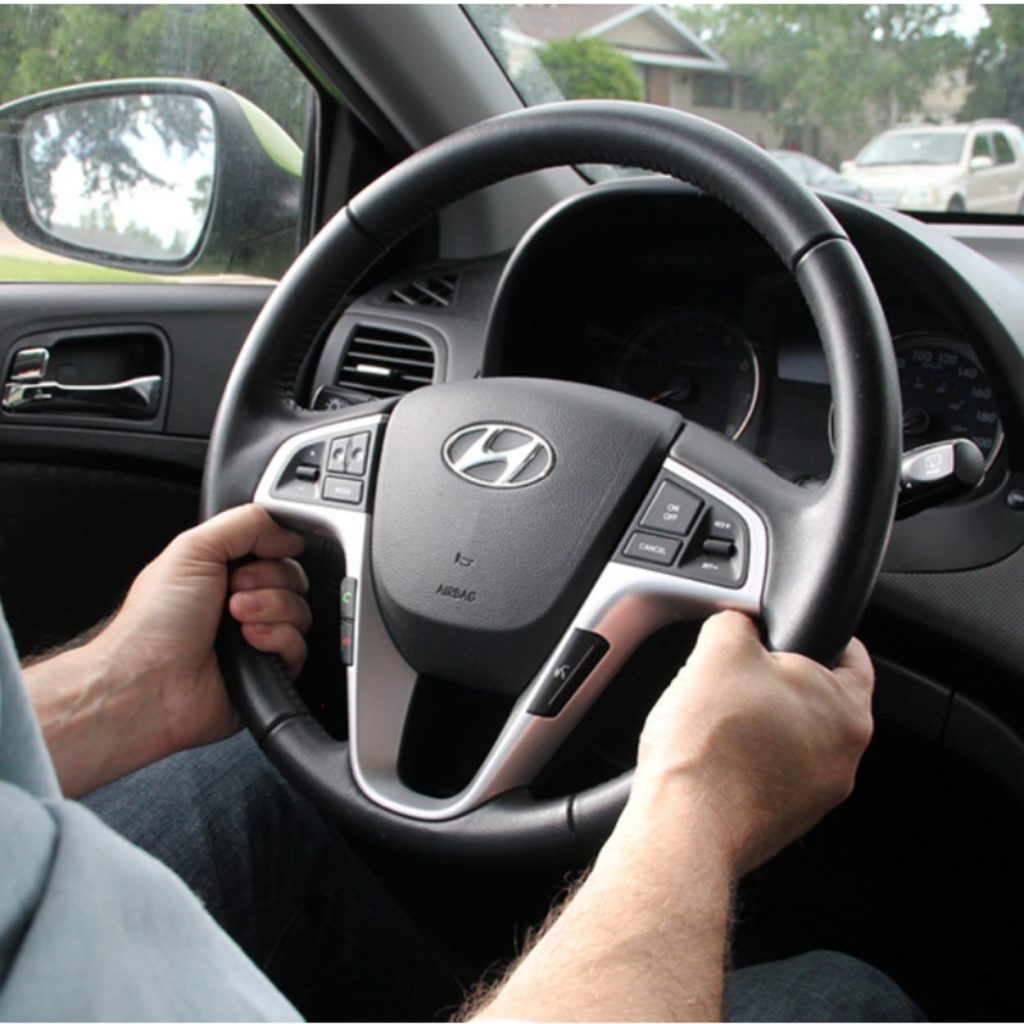
The 8 & 4 position is a comfortable alternative for long-distance driving. It reduces arm fatigue and keeps your hands away from the airbag’s direct trajectory. However, it’s crucial to remain alert and avoid letting your hands rest on your lap while driving in this position.
Steering Techniques: Navigating with Precision
In addition to proper hand placement, mastering steering techniques is vital for effective vehicle control. Each technique serves a specific purpose, depending on the driving scenario:
1. Hand Over Hand
The hand-over-hand technique is ideal for sharp turns or U-turns. To execute this, start turning the wheel in the desired direction, then bring one hand over the other to continue turning. This method allows for quicker wheel rotation, making it useful in situations requiring precision.
2. Push-Pull (Shuffle) Method
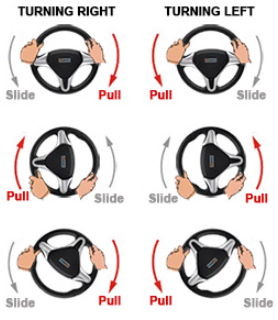
The push-pull or shuffle method is a safer alternative to hand-over-hand steering. In this technique, one hand pushes the wheel upward while the other pulls it downward, avoiding the risk of crossing your arms over the airbag. This method is particularly effective for maintaining control during gradual turns and is widely taught in driving schools.
3. Single-Handed Steering for Reversing
When reversing, it’s common to use a single hand on the top of the steering wheel while the other hand rests on the passenger seat for stability. This provides better visibility of the rear window and allows for smooth adjustments.
Steering Techniques to Avoid
Certain habits can compromise vehicle control and safety. Avoid these steering mistakes:
1. Hooking: Gripping the inside of the steering wheel with your palms and forearms facing upward increases the risk of injury in a collision.
2. Palming: Using your palm to turn the wheel is unsafe as it provides insufficient control and may cause your hand to slip.
3. One-Handed Driving: Keeping only one hand on the wheel, except when shifting gears, reduces control and reaction time.
Factors Influencing Steering Control
Several factors can affect your ability to steer effectively. Let’s explore these elements:
1. Seating Position
An improper seating position can hinder your control over the steering wheel. Adjust your seat so that your arms are slightly bent at the elbows when holding the wheel. This ensures a comfortable yet firm grip.
2. Power-Assisted Steering
Modern vehicles come equipped with power-assisted steering, making it easier to maneuver the wheel, especially at low speeds. If the steering feels heavy, it may indicate a malfunction requiring professional attention.
3. Road Conditions
Driving on uneven surfaces, such as gravel or potholes, requires a firmer grip to prevent the wheel from spinning out of control. Avoid wrapping your thumbs around the inside of the wheel to reduce the risk of injury in such scenarios.
4. Airbag Deployment
The presence of an airbag within the steering wheel emphasizes the importance of proper hand positioning. Keeping your hands at 9 & 3 or 8 & 4 minimizes the risk of injury during airbag deployment.
The Role of Steering in Special Driving Scenarios
Steering becomes even more critical in specific driving conditions. Here’s how to adapt your techniques:
1. Driving on Curves
When approaching a curve, prepare by moving the hand on the side of the curve slightly upward (e.g., 1 o’clock for a right-hand bend). Pull the wheel down smoothly while maintaining a steady grip.
2. Reversing
Reversing requires precise steering. Turn the wheel in the direction you want the rear of the vehicle to go. Practice is essential to build confidence in this maneuver.
3. Parking
Steering while parking demands a combination of hand-over-hand and push-pull techniques for tight spaces. Adjust your speed to maintain control during these slow maneuvers.
Training and Practice
Mastering steering techniques requires practice and consistency. Enrolling in a driving school can provide valuable guidance. Experienced instructors can help you develop the muscle memory needed for effective steering in various situations.
Conclusion
Proper hand positioning and steering techniques are fundamental to safe and efficient driving. Whether you’re navigating sharp turns, reversing, or cruising on highways, maintaining control of the steering wheel ensures a safer journey for you and your passengers. Remember to adapt your techniques based on the driving scenario and vehicle features, such as airbags and power-assisted steering. With consistent practice and attention to detail, you’ll master the art of steering and enjoy a confident, comfortable driving experience.
Drive safely, and keep your hands steady at 9 & 3 for the ultimate control!